How do collectors keep track of their watches?
Every collection crosses a line — usually somewhere between five and fifteen watches — where memory stops working. Which watch has the dead battery? When did the Yacht Timer's cell go in? What did the eBay listing say about that strap? Collectors solve this three ways, each with honest trade-offs.
The spreadsheet is where most people land first, and it genuinely works: free, flexible, yours forever. Its weaknesses show up with time — photos don't really live in cells, checking it on your phone at a flea market is miserable, and a spreadsheet never reminds you of anything. It's a filing cabinet, not an assistant.
Notes apps and photo albums are the low-friction option: snap the watch, jot the details. Fine at five watches; at twenty, finding the one note with the battery type you need means scrolling through everything you've ever written.
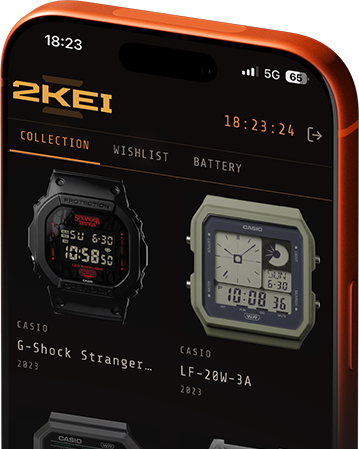
Dedicated trackers are built around what the other two lack: structured fields per watch, photos attached to records, and — the part that matters most for digital watches — battery tracking with reminders. Most watch apps, though, are built for mechanical collections: accuracy logging, service intervals, valuations. Digital and retro collectors were the afterthought, which is exactly why we built 2kei — battery types and change dates, module numbers, and the story behind each piece as first-class fields.
Whatever tool you pick, record these while you still remember them: where and when you got it, what you paid, battery type and last change date, strap size, the module number, and the story — the seller's anecdote, the trip it came from, the person it reminds you of. Specs can be looked up later; stories can't. Ask any collector what they regret not writing down, and it's never the lug width.
A DIGITAL HOME FOR YOUR DIGITAL WATCHES
Collection, batteries, and the story behind each piece. Free to start.
→ START FREE