Is a vintage "water resist" watch still water resistant?
Honest answer: no — not unless it's been resealed and tested. The words on the dial describe what the watch could do when it left the factory. Water resistance is not a property of the case; it's a property of the gaskets, and gaskets are rubber. Thirty-year-old rubber is not doing its job.
What actually fails: the case back gasket, the button (pusher) seals, and the crystal seal. They harden, shrink, and crack — invisibly. The case looks identical; the seal is gone. And digital watches are especially unforgiving: one drop of water on a module can kill it instantly, where a mechanical movement might survive a service.
Reading the ratings, for context:
WR / Water Resist (no number): splash-proof when new. Hand washing, rain.
50M / 5BAR: swimming when new. Not diving, not hot showers.
100M / 10BAR: swimming and snorkeling when new.
200M+ (most G-Shocks): serious water use when new.
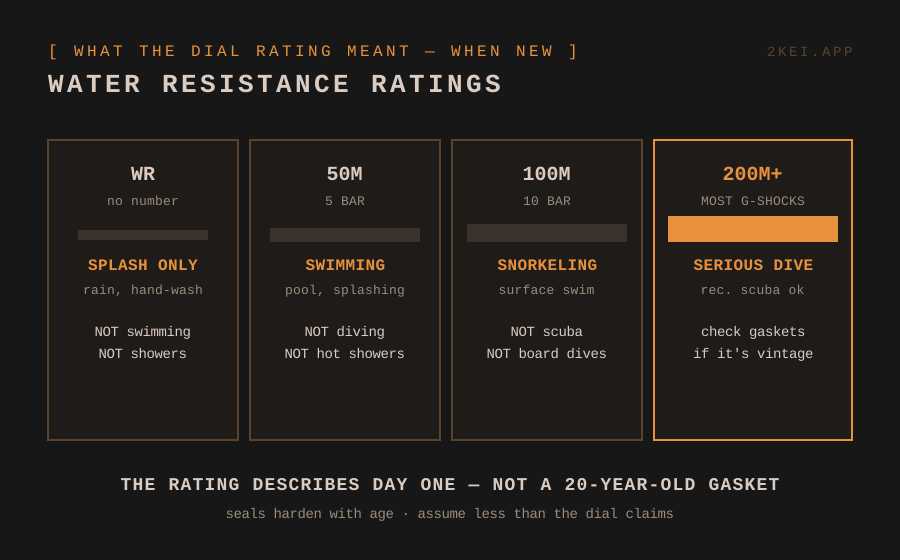
The "when new" is the entire point of this guide.
Hot water deserves its own warning: showers are worse than swimming pools. Heat softens gaskets and steam penetrates where liquid water wouldn't. Plenty of vintage watches survive a pool and die in a bathroom.
Can resistance be restored? Partially, yes: a watchmaker can replace the gaskets and pressure-test the case. For models with available parts, this is routine. But an honest note: on a 40-year-old case with worn sealing surfaces, a pressure test tells you what it can handle — assume less than the dial claims.
The collector's practical rule: treat every vintage digital as splash-resistant at best, no matter what the dial says. Track which watches in your collection have fresh gaskets and which haven't been opened since the 90s — that's exactly the kind of per-watch note worth keeping.
A DIGITAL HOME FOR YOUR DIGITAL WATCHES
Collection, batteries, and the story behind each piece. Free to start.
→ START FREE